


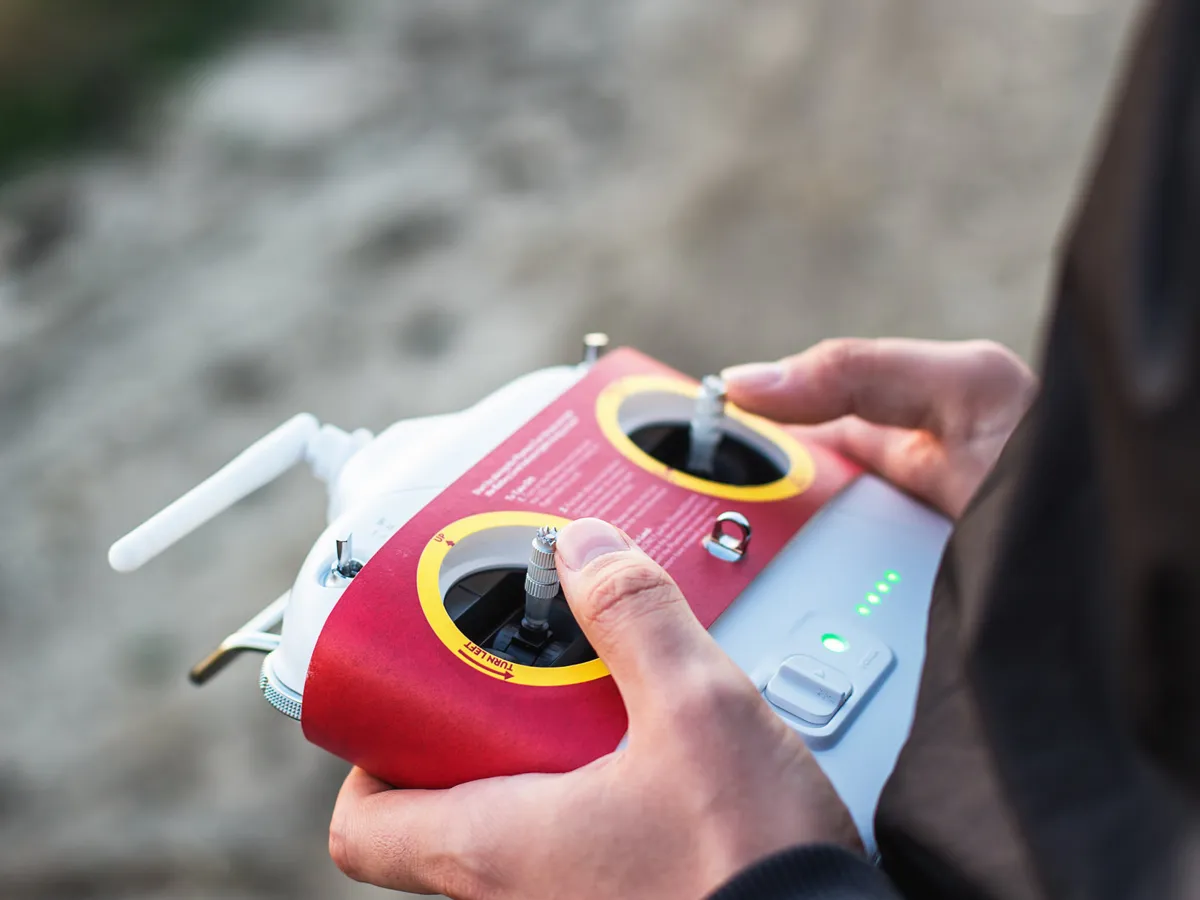
The short answer: not if your drone weighs 0.55 pounds (about 250 grams) or less and you fly it only for fun, following the FAA’s rules for recreational flyers. Every other drone must be registered, the FAA says. Most small camera drones sold as “249 g” are built to fit that rule.
One catch: the weight counts everything on the drone at takeoff. A bigger battery or add-ons can push a “249 g” drone over 0.55 pounds, and then it needs registering. To check yours, look up the maker’s takeoff weight for the exact battery in the box, and count anything you attach, like propeller guards or a light. If you’re unsure, weigh it ready to fly.
And “no registration” doesn’t mean “no rules.” Before the first flight you still need to pass a free online safety test, and a few simple rules apply every time you fly. For which drones qualify, see our guide to drones you don’t have to register.
Before your first flight: take the free test
- Take the free FAA safety test. It’s called TRUST (The Recreational UAS Safety Test). It’s online, free, and has no minimum age. You can correct your answers until you pass, so nobody fails. You’ll get a certificate at the end.
- Save the certificate where you can find it. You must carry proof that you passed when you fly, so download it to your phone or print it. The test sites don’t keep a copy, so if you lose it you’ll have to take the test again.
You take the test through one of the FAA’s approved providers, listed on the FAA’s TRUST page. They include the Academy of Model Aeronautics, the Boy Scouts of America and several colleges.
The rules every time you fly
These apply to every drone flown for fun, whatever it weighs:
- Stay at or below 400 feet. Near an airport, fly no higher than your approval allows.
- Keep the drone where you can see it with your own eyes. A friend standing right next to you can watch it for you.
- Give way to planes and helicopters. They can fly low, and not just near airports.
- Get permission before flying near an airport. At many airports you can ask through an FAA-approved app, and the answer often comes back right away. Elsewhere you apply on the FAA’s DroneZone website, which takes longer.
- Follow the safety guidelines of an FAA-recognized drone group. The FAA keeps a list of these groups; pick one and follow its guidelines.
- Fly safely. Don’t fly in a way that puts other aircraft at risk.
Not sure if a spot is OK? The FAA’s B4UFLY service shows where you can and can’t fly. It’s offered through several FAA-approved apps. States, cities and parks can also have their own rules about where you can take off and land, so check those too.
What counts as “for fun”?
Flying for your own enjoyment: filming a hike, a beach day or the family at the park. The FAA says being paid is not the test. These don’t count as fun flying:
- taking photos to help sell a house,
- checking a roof for someone,
- filming a school game for the school’s website.
Volunteering your drone for a charity can count as work too. Flying like that comes under the FAA’s rules for work and business, called Part 107, where every drone must be registered and the pilot needs an FAA certificate. The FAA’s advice if you’re unsure: “When in doubt, assume Part 107.”
What about Remote ID?
Remote ID is a signal some drones send out while flying: an ID number plus where the drone and its pilot are. Think of it as a digital license plate. The FAA requires it for drones that must be registered or have been registered.
So a drone of 0.55 pounds or less that you fly for fun, and haven’t registered, doesn’t need it. If you register it anyway, it then has to meet the Remote ID rule. The same goes for a drone that add-ons push over 0.55 pounds: once it must be registered, it needs Remote ID too.
Common questions
If the whole family flies it, who takes the test?
Everyone who flies it. The FAA says all recreational flyers must pass the test and carry proof, so each person needs their own certificate. It’s free, so there’s no cost to adding a second pilot.
What if my drone weighs more than 0.55 pounds?
Then you register it on the FAA’s DroneZone website. For fun flyers it costs $5 at the time of writing (check the FAA’s registration page for the current fee), covers all your drones, and lasts three years. You label each drone with the number and carry the certificate when you fly. You must be a US citizen or permanent resident and 13 or older; for a younger owner, someone 13 or older registers it.
Which drones are light enough?
By their makers’ figures, DJI’s Mini 4K and Flip and Potensic’s ATOM SE all weigh under 249 grams with the battery they come with. See all six of our picks of drones you don’t have to register, and if you’re buying for someone else, the best drone to give as a gift.
Sources
- FAA: How to register your drone
- FAA: Recreational flyers and community-based organizations
- FAA: The Recreational UAS Safety Test (TRUST)
- FAA: LAANC (permission to fly near airports)
- FAA: B4UFLY
- FAA: Remote identification of drones
- FAA: Recognized community-based organizations
- FAA: Flying for work or business (Part 107)
- FAA: Aeronautical Information Manual, 11-2 (recreational flyers)
- eCFR: 14 CFR 48.15, requirement to register